Electric fence setup: the parts
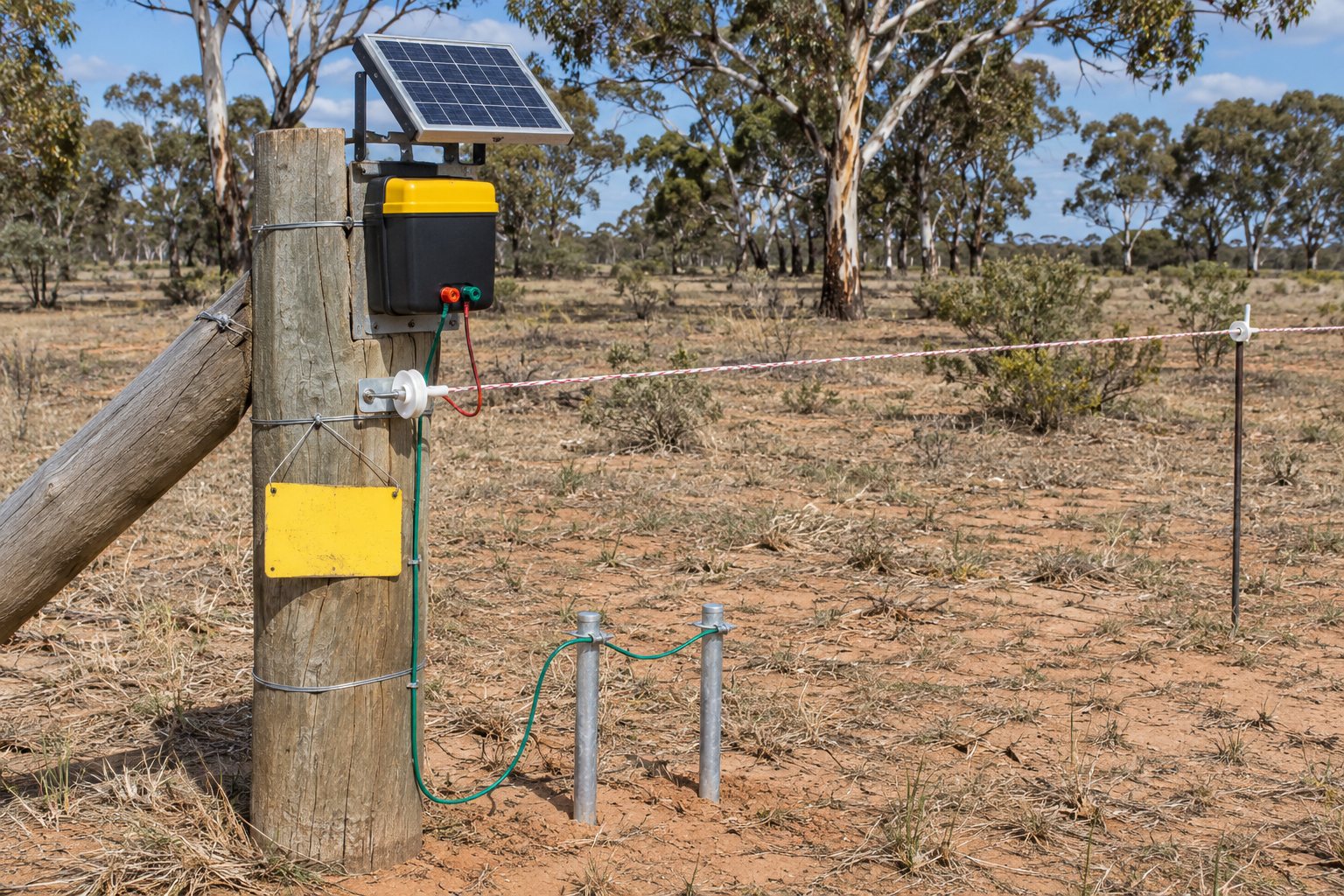
An electric fence is a fence with a charger, or energiser, that sends a short pulse along the wire, about once per second according to the general reference we read (Wikipedia, a secondary source). The pulse needs a path back to the energiser, and that path is the earth. In dry, sandy country the earth is the part most likely to need thought, which is why this guide spends most of its time there. One retailer's blog, which is retailer content that promotes one brand, lists the parts of a typical fence.
| Part | What the sources we read say |
|---|---|
| Posts, end-strainers and corner posts | Listed by the retailer blog as the frame. The supplier handbook places strainer assemblies at fence ends, gateways, corners and direction changes (see the farm and stock fencing page). |
| Wire or tape | High-tensile wire, or poly-tape, poly-wire or poly-rope. The supplier handbook says barbed wire should not be electrified. |
| Insulators | Listed as a part by the retailer blog. The sources we read give no further specification. |
| Energiser | The supplier handbook says to compare energisers on output energy, not stored energy. |
| Earth stakes | Galvanised earth stakes. The retailer blog says about 1.5 m deep and about 3 m apart. The supplier handbook says 2 m stakes, 3 to 4 m apart. One gives depth and the other gives stake length, so the figures are not like for like. |
| Voltage tester, cut-out switches, lightning protection, warning signs | All listed by the retailer blog. The sources give no detail on how to fit them. |
Read the table as a shopping list for the conversation with a contractor, not as a design. The sources give stake depth, stake length and spacing in different terms, so ask the contractor which figures the energiser's maker specifies for your fence and why.
Why dry sandy soil changes the earthing
The supplier handbook describes two systems. An All Live system suits moist, conductive soil. An Earth Wire Return system is for "dry or sandy soils that is not conductive". The retailer blog adds that dry or sandy soil may need more earth stakes than usual, and that earthing should be checked at least annually or after a dry spell. Mildura Airport's mean annual rainfall is 285.8 mm (Bureau of Meteorology), so this is a dry district. We do not say what that means for any particular fence, because the sources do not.
The Mallee soil survey describes soils from sands to clays, with sands mainly on east-west dunes (Mallee Calcarosols). It says nothing about earthing. Whether your block counts as dry or sandy in the handbook's sense is for the contractor to judge on site, so describe the ground when you ask: loose sand, hard-setting clay, limestone near the surface or a mix. The hard ground guide covers the soil descriptions.
Wire choice, barbed wire and mixed fences
Barbed wire should not be electrified, the supplier handbook says. For horse paddocks, the general reference says mild steel barbed wire is not advised for horses and that smooth wire is used, often with an electric line; the horse and lifestyle block page covers it. Guidelines from another catchment region (not the Mallee) allow one or two electric wires in the flood-friendly fence type they call type A (North Central CMA), which matters if the line crosses low ground. Combining an electric wire with standard stock fencing is described as a way to reduce cost in the general material we read, and the cost guide shows where that sits among the other factors.
New South Wales side of the Murray: electric fencing and planning
On the New South Wales side of the Murray, a statewide fact sheet on exempt development, hosted by Wentworth Shire Council, says that in rural zones electric fencing "must be constructed in accordance with AS/NZS 3014:2003" (NSW exempt development fact sheet). The fact sheet is dated January 2022 per the copy we found, it is statewide and does not mention Wentworth, and we have not verified the current status of that standard, so check the current version with the council. The NSW Planning Portal (exempt development: fences) adds that electric fencing and barbed wire are banned in residential, business and industrial zones except R5. The Murray page sets out the other exempt development limits for fences.
On the Victorian side of the Murray, we found no page in our sources that sets an electric fence standard. Ask Mildura Rural City Council on 03 5018 8100 whether anything applies to your fence.
Safety and licence questions
A university safe operating procedure for fencing (University of New England procedure), which is a procedure and not a regulator's rule, says to consult the electricity company before working near overhead lines, and to call Dial Before You Dig on 1100 before digging. It also notes the recoil and cuts from high-tensile wire, and gloves and glasses for that. The regulator pages we found do not say whether electric fencing needs a licence or registration. Ask the contractor which licence or registration they hold, and check it with the regulator for the side of the Murray where the fence is. The licensing page sets out what the pages do say.
Questions to ask about an electric fence
- Which earthing system? All Live or Earth Wire Return, and why it suits your ground.
- How many earth stakes? How long, how far apart, and whether dry sandy soil changes the number.
- Which energiser? Output energy rather than stored energy, and what length of fence it is rated for.
- How will it be checked? Who tests the earthing, and how often, including after a dry spell.
- What else is fitted? Cut-out switches, lightning protection and warning signs.
- What is on the line already? Overhead power lines, buried services and the 1100 check.
Season and fire restrictions can affect when the work is done, and the seasons guide covers them. When you are ready, send your town, the side of the Murray and a photo of the line.
What this guide cannot do
This guide cannot design an electric fence, choose an energiser or tell you how many earth stakes your soil needs. The sources we used are a supplier handbook, a retailer blog that promotes one brand and a general reference, and none of them is an Australian regulator's standard for rural electric fences. We could not verify the current status of the standard cited in New South Wales rural zones. We are a referral service: we pass your enquiry to local contractors, who design and build the fence and hold any licence or registration that applies.
Check the current rules before you rely on this
This page describes the parts of an electric fence, how dry sandy soil changes earthing and the planning and safety points found for Mildura and Wentworth Shire. It describes the rules in general terms as they stood in November 2026. Standards, forms, thresholds and fines change.
The authoritative sources are Rural supplier's fencing handbook (undated; supplier guide, no heights, spacings or costs), Retailer blog, how to build an electric fence (retailer content, promotes one brand), Wentworth Shire Council, fences: rules for exempt and complying development (NSW fact sheet, January 2022, statewide), NSW Planning Portal, exempt development: fences and University of New England, safe operating procedure 09: fencing (28 March 2018; a university procedure, not a regulator). Where anything here differs from those sources, they are right and we are not.
We are not fencing contractors, builders, regulators or lawyers. For what applies to your fence, ask the contractor which licence or registration they hold, then ask the regulator for the side of the Murray where the fence is: Building Commission NSW (13 27 00) for New South Wales, the Building and Plumbing Commission for Victoria.
Accurate at the time of writing, November 2026. Always check the source before relying on it.